
Horizontal extension springs
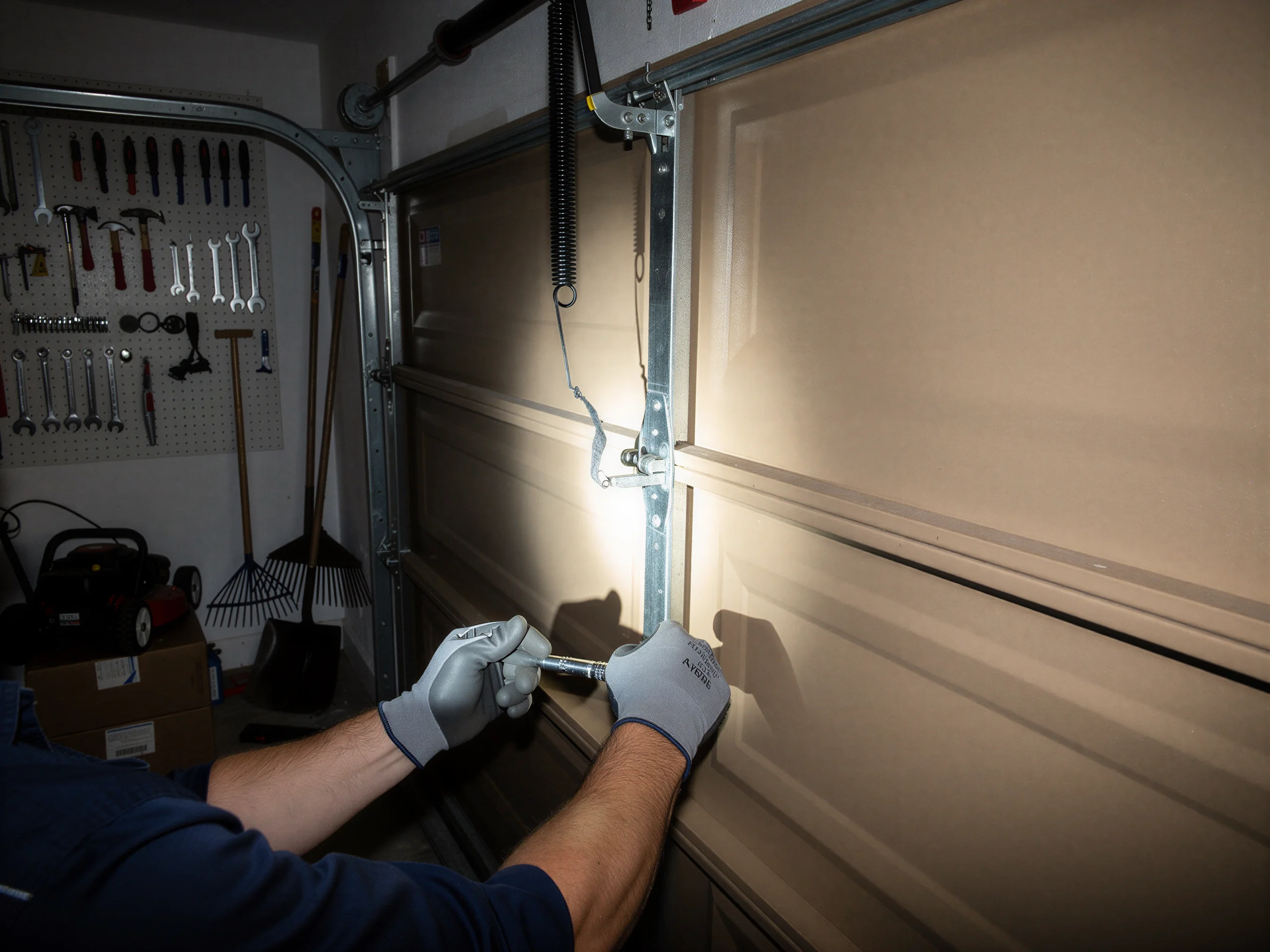
That gap matters because it changes what's actually bolted to the header above your door. A lot of these 1970s builds use extension springs stretched along the horizontal tracks rather than a torsion bar overhead.
Placentia, Fullerton
Garage door repair for Placentia's 1970s tract homes - extension-spring systems, original steel panels, and chain-drive openers. Serviced from our Fullerton shop, 4 miles out.
DIY or pro
Most of the garage doors we see in Placentia are original to houses built around 1976, which puts them a decade or more newer than the typical home across the rest of our service area, where the median build year sits at 1964.
That gap matters because it changes what's actually bolted to the header above your door. A lot of these 1970s builds use extension springs stretched along the horizontal tracks rather than a torsion bar overhead.
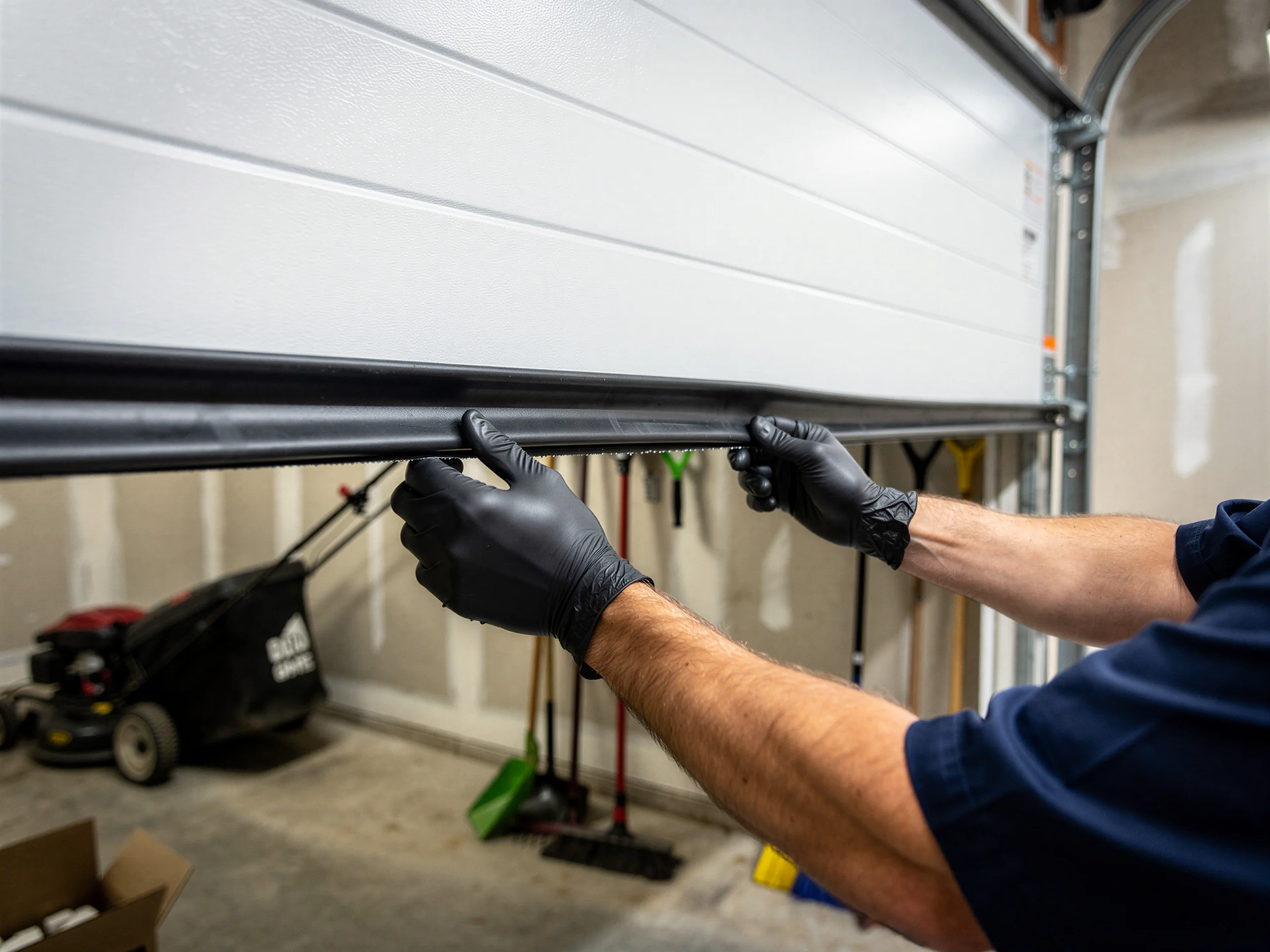
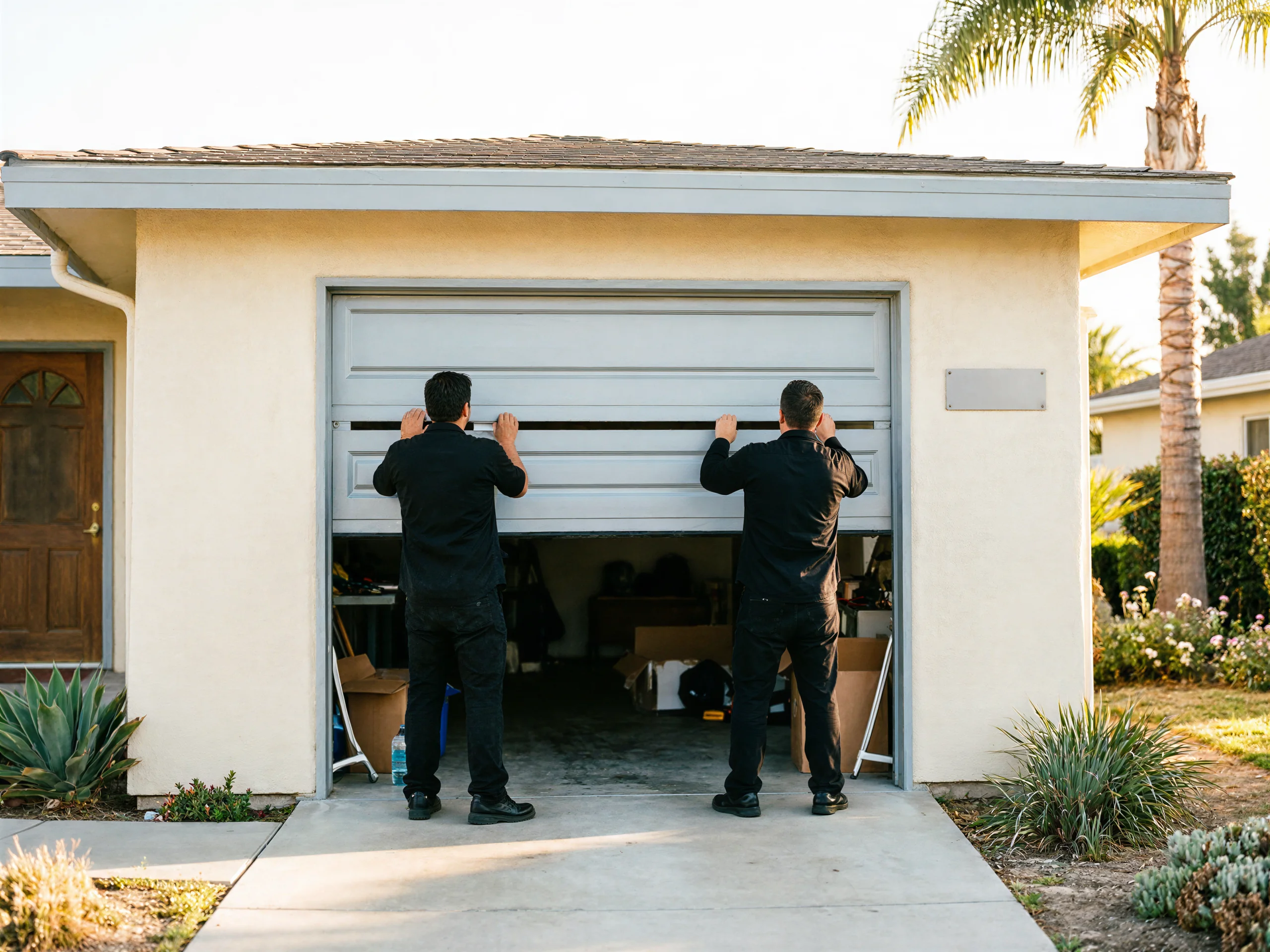
Extension springs store the same energy as a torsion setup, but they do it without a shaft, and that makes them easier to misjudge if you've never worked with one. If a cable has jumped its pulley or a spring has stretched out of shape, you can get the door moving again for a day or two with pliers and patience.
What you can't easily judge from the garage floor is whether the safety cable running through the spring is still intact, or whether the pulley bracket is cracked and about to let go under load. We'd rather you call before that cable fails than after.
Our process
We come out from our Fullerton shop, about four miles up the road, which puts Placentia closer to us than several of the other towns we cover, including Brea, La Habra Heights, and Rowland Heights.
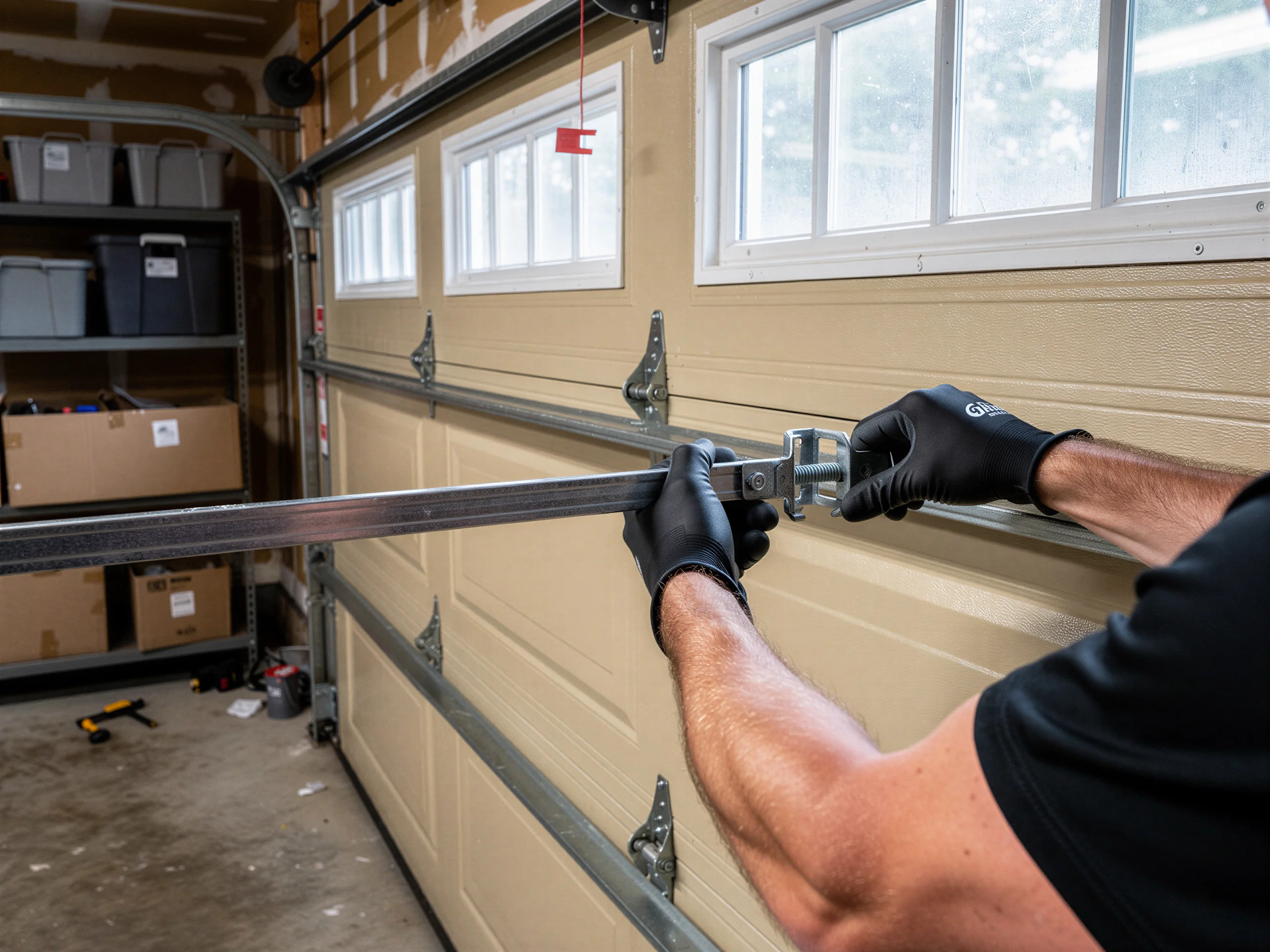
There's no branch office here and we don't pretend there is one - every job starts with a drive, and we tell you that upfront rather than promise a response time we can't back. On the extension-spring doors common to this area's 1970s stock, we replace both springs as a pair, matched to the door's actual weight rather than whatever was on it last, and we run a new safety cable through each one.
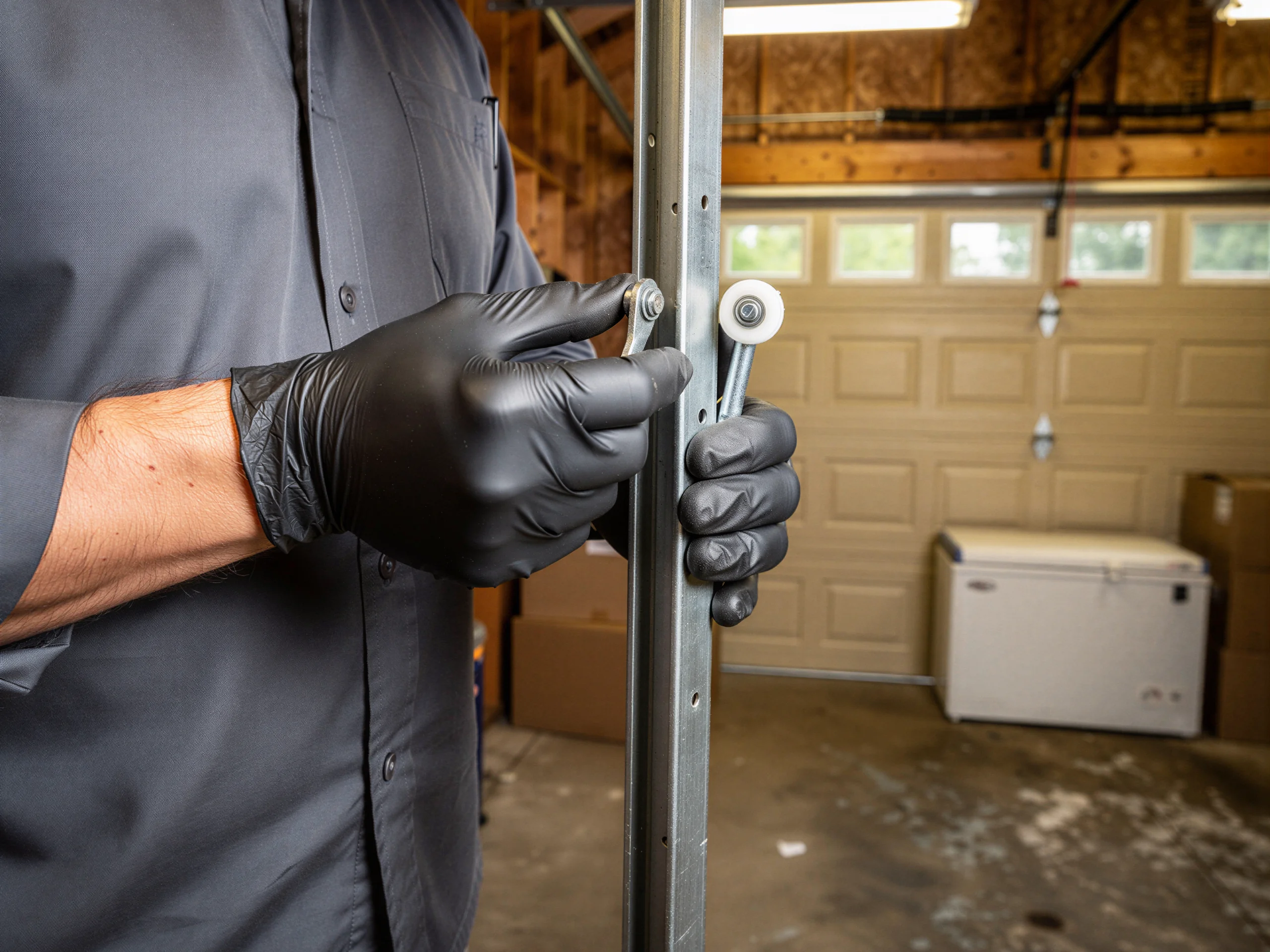
If the track is the thin aluminum channel a lot of builders used in that era, we check it for the kind of slow bend that comes from one roller riding rough for years, not from any single impact.
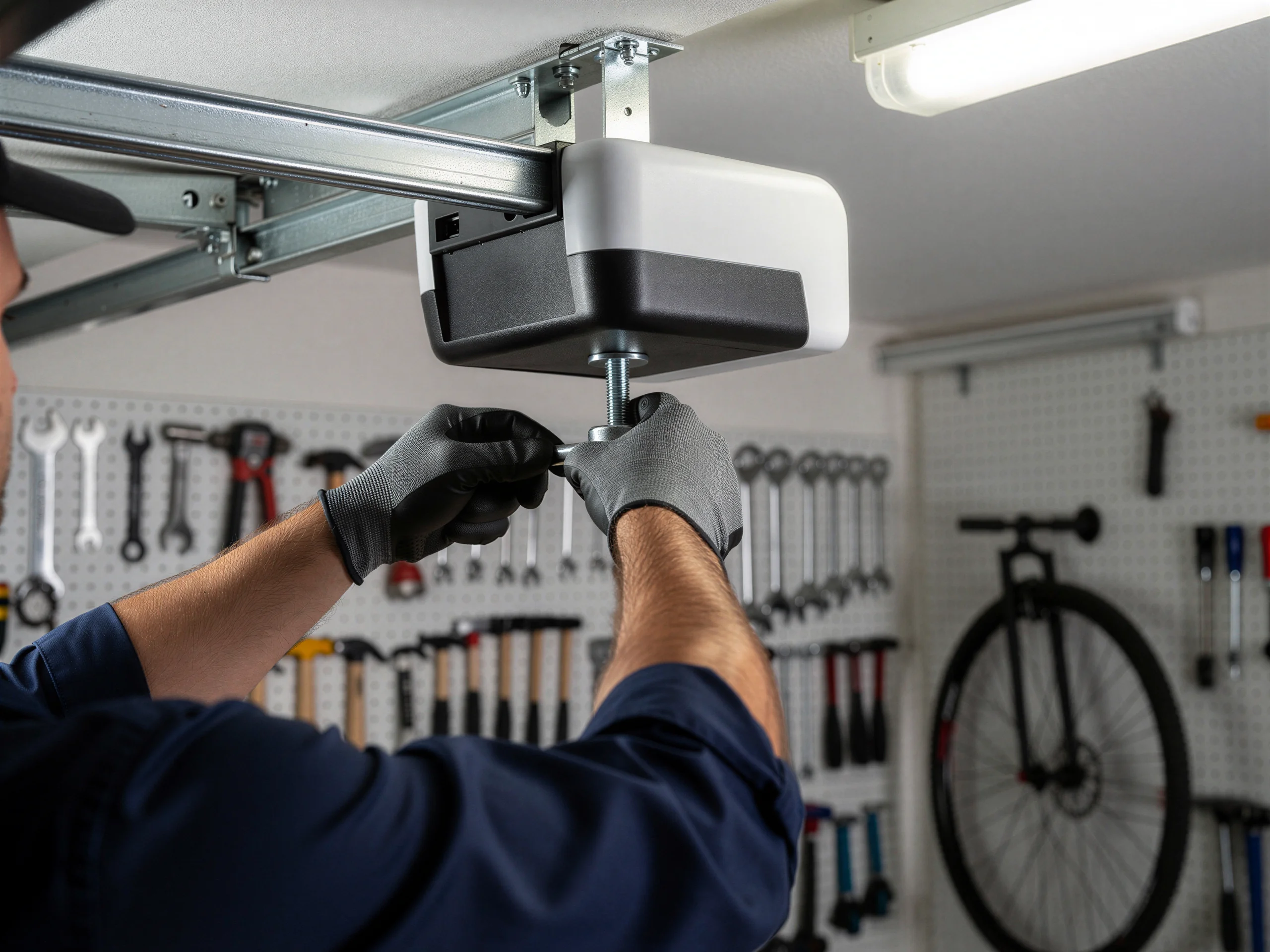
Where the opener is the original chain-drive unit, we tell you straight whether it's worth repairing or whether the gearset is far enough gone that a new opener makes more sense than chasing parts for one that's close to fifty years old.
Watch-outs
The extension springs used on mid-1970s Placentia doors do their job for years and then let go all at once - there's no slow leak with these the way there sometimes is with a torsion spring.
When one side goes, the door racks sideways in its tracks, and if you keep running the opener against that, you're grinding the roller against a track edge it was never meant to meet. The other failure we see tied to this era is the pulley itself.
Builder-grade steel pulleys from the 1970s corrode from the inside of the bearing out, and because they're tucked up near the header, you don't see it until the wheel seizes and the cable starts fraying against a pulley that's stopped turning.
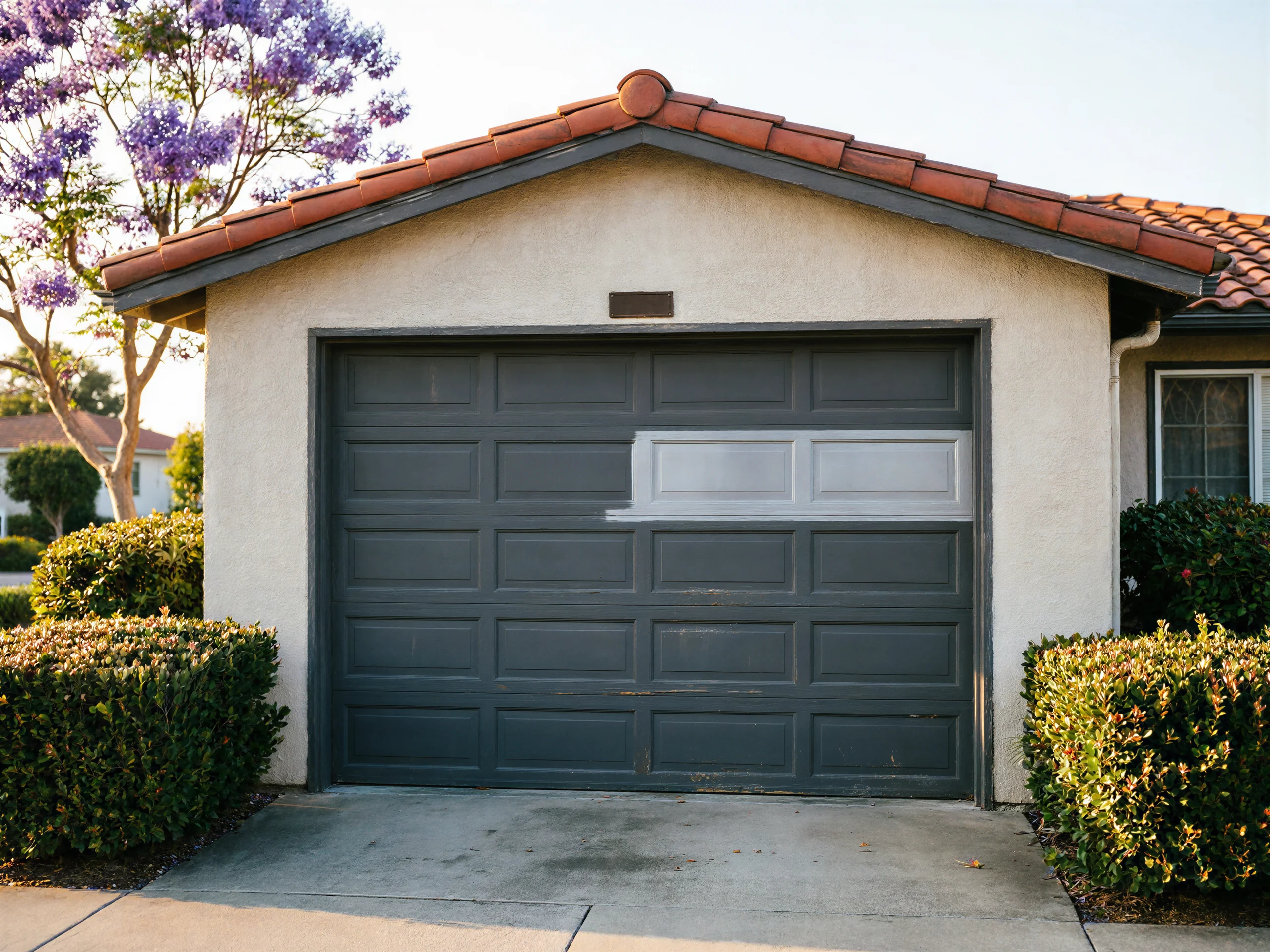
Galvanized panels from this period also dent more easily than current gauge steel, so a bumped bottom panel can throw the whole door's alignment off even when the hardware underneath is fine.
Warning signs
The first sign on an extension-spring door that's about to fail is usually a loud bang from the garage, followed by the door refusing to lift evenly - one side comes up while the other drags or won't move at all.
Some owners mistake this for an opener problem and run the motor against it anyway, which is the fastest way to turn a spring job into a track-and-roller job.
On the aluminum-track doors, the tell is usually quieter: a scraping sound as the door travels, worse on one side, that gets louder over a few weeks rather than showing up all at once.
If your opener has started straining audibly partway through the cycle, or reversing on its own before the door is fully down, that's the motor telling you it's compensating for springs that no longer carry their share of the weight.
Timing
A straightforward extension-spring and cable replacement on a Placentia door is typically a single visit - we carry common spring sizes on the truck. Where it slows down is hardware specific to this era that's no longer made the way it was: certain aluminum track sections and some of the original pulley brackets from 1970s builders aren't something we stock, and ordering them can add a few days. We'll tell you at the door if that's the case rather than quote a timeline we can't hit.
For households here - Placentia runs about 16,979 of them against roughly 953,710 across our whole coverage area - median income sits higher than the area average too, $110,575 against $96,041 service-wide. That doesn't change what's wrong with the door, but it does mean replacement with better-spec hardware is often the more practical call than patching a fifty-year-old track back together.
Questions
On the extension-spring systems common to Placentia's 1970s homes, the spring stores its energy along the horizontal track rather than on a torsion shaft. When one gives out, it releases all at once instead of gradually weakening, which is what you're hearing. Don't run the opener again until it's replaced - the door isn't balanced on one spring alone.
Depending on the builder, some Placentia doors still have original aluminum track or pulley hardware from around 1976. We stock common spring sizes on the truck, but certain track sections from that era aren't made anymore and can take a few extra days to source. We'll tell you upfront if your job falls into that category.
No - we run out of Fullerton, about four miles away, and come to you from there. We don't keep a local branch or promise a fixed response time because of it; we just tell you honestly what the drive and the job will take.
Explore more
Ready when you are
Fullerton Garage Door Pros repairs and installs garage doors, springs and openers in Fullerton, CA and the surrounding area.