Blog
What Happens When We Come Out for a Fullerton Service Call
A look at what our techs check on a Fullerton service call, from 1960s torsion hardware to mild-climate wear, so you know what's included before we show up.
Season by Season
Fullerton doesn't give you the freeze-thaw cycle or the humidity swings that chew through hardware in other parts of the country. The service area sits in a mild temperate band, so we don't see the seasonal spike in spring failures that colder climates get every January. What we do see is steady, slow wear that doesn't announce itself until a cable frays or a roller seizes. A service call here isn't about bracing for a storm season. It's about catching the gradual stuff: lubrication that dried out over a long dry summer, hardware that's been sitting unused and uninspected since whenever the house last changed hands. Because the weather doesn't force maintenance on anyone, the biggest risk in this town is simply going too long between checks. We tend to get more calls in late summer and early fall, not because the door breaks seasonally, but because that's when people finally notice the noise they'd been ignoring since spring.We don't push a seasonal tune-up package because the climate here doesn't demand one the way a snow state would. If your door's running quiet and balanced, you can often skip a cycle. That's an honest answer, not a sales pitch.
What Is Going On
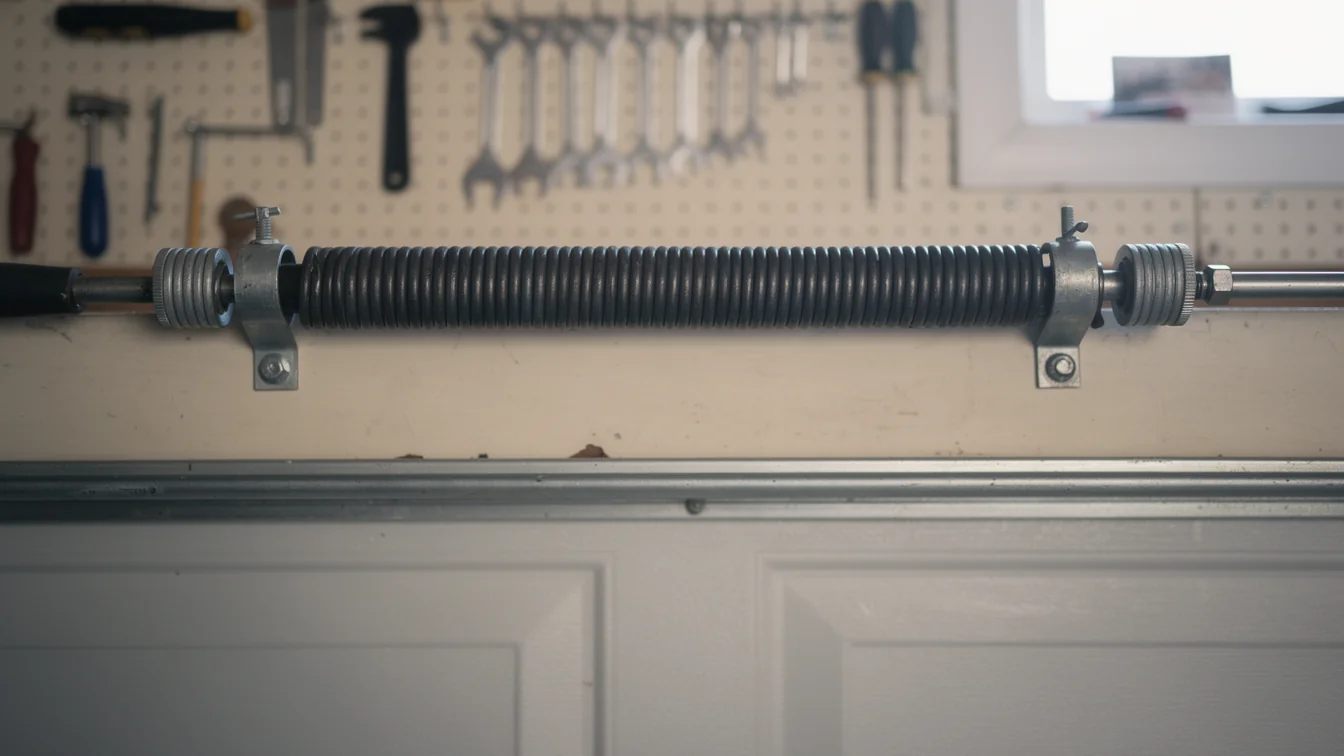
Most of the housing stock in this part of the county went up between 1938 and 2012, with a median build year around 1964, and the broader area is dominated by 1960s and 70s construction across the 76 named communities it covers. That matters on a service call because a door built or last replaced around that era usually means specific things: side-mounted torsion springs instead of the center-mounted setup you'd find on a newer build, steel tracks that have been re-shimmed more than once, and openers that have already been swapped out at least once since the house was built. When we show up, we're not guessing at what decade we're dealing with - the age of the house tells us what to expect from the gear before we even open the panel. A lot of what looks like a broken opener on a house this old is actually a spring that's lost enough tension that the opener is straining to do a job springs should be doing. We check both, every time, because on a door this age they're rarely independent problems.
When to Call Someone
Call when the door is noticeably heavier to lift by hand than it used to be, when it slams the last foot of travel instead of settling, or when you hear a bang from the garage and the door won't move afterward - that's almost always a broken torsion spring, common on houses built in the 1960s and 70s era that makes up most of this area's stock. Call if a cable looks frayed or has come off a drum; that's not a tighten-it-yourself fix. Don't call for a door that's just noisy but still moves evenly and seals at the bottom - that's usually a lubrication job, and we'll tell you that over the phone instead of billing a truck for it. One honest limit: we don't carry parts for every discontinued opener model from a 1960s build, and if yours is one of those, we may need to order the part before we can finish the job in one visit. We'll tell you that up front, not after we've already opened the panel.
What the Weather Here Does to It
The mild temperate climate here is kind to garage doors in the ways that matter most - no deep freeze to crack a panel seal, no heavy snow load to test a track's alignment. But mild doesn't mean nothing happens. Steady warmth and dry stretches pull moisture out of lubricant and rubber seals faster than owners expect, especially on doors with original 1960s-era hardware that was never built with synthetic lubricants in mind. The failure mode here isn't dramatic weather damage, it's quiet drying-out: a weatherstrip that's gone brittle and cracked at the corners, bearings that squeal because the grease inside has thinned to nothing. None of that shows up on a 10-minute glance. It shows up when a tech actually runs the door through a full cycle and listens for where it hesitates. That's most of what a service call is doing in this climate - not fixing storm damage, but finding the slow, unglamorous wear that mild weather lets hide for years.
Questions
Common questions
How old does my garage door hardware need to be before it's a concern?
If your house was built anywhere near the area's median year of 1964, there's a good chance the torsion spring or cable system has been replaced at least once already. We check the install date on the hardware itself rather than assuming from the house age, since previous owners may have already swapped parts.
Do you service areas near Fullerton too?
Yes. Our service area includes nearby communities such as La Habra, Placentia, Brea, and Buena Park, among others within about ten miles.
Why does my door feel fine but sound rough?
On houses from the 1960s-70s era common in this region, rollers and hinges often still have original-style lubrication that's thinned out over the decades. A rough sound with smooth motion is usually a lubrication and inspection job, not a parts replacement.
Can the mild climate here really affect my door?
It can, just slowly. The mild temperate conditions don't crack panels or warp tracks the way harsh winters do, but dry stretches dry out seals and lubricant over time, so wear here tends to be gradual rather than sudden.
Recommendation
You Might Also Like
More garage door guides for Fullerton homeowners.
What a Technician Checks First on a Fullerton Garage Door
A Fullerton technician's first stops on a service call, tied to this city's 1960s-70s housing stock and mild coastal-inland climate swings.
Read guide
What a Replacement Garage Door Costs and Means in Fullerton
A look at replacement garage doors for Fullerton houses built mostly between 1938 and 2012, what the mild coastal climate does to doors, and when a repair stops making sense.
Read guide
Weather Seals and Draughts in Fullerton Garages
Fullerton homes built 1938-1964 often have worn or missing door seals.
Read guideReady when you are
Need a garage door sorted in Fullerton?
Fullerton Garage Door Pros repairs and installs garage doors, springs and openers in Fullerton, CA and the surrounding area.